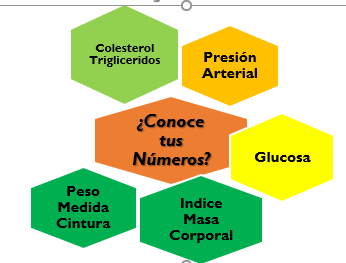
What are your health numbers?
We are always surrounded by numbers. However, they begin to take on greater importance when they
are
tied to health status. You've probably heard about them during a visit for medical care. But do
you know what they mean? Do you know what your numbers are telling you? To enjoy full health and
quality of life it is important to know them and discuss them with your physician. Remember to
always
keep a record of each of them, as writing them down will be a great help in improving or modifying
your health care plan. Ask your physician to help you establish the ideal numbers for you. These
may
vary depending on your age, gender, and existing conditions.
Get tested today and know your numbers!
Know the Glucose (sugar) number
Glucose is a type of sugar and is the main
source of energy in the body. Glucose testing is used to measure blood sugar levels to determine if
they
are within healthy limits, elevated, or too low. It is often used to diagnose or monitor diabetes.
Monitoring is the main tool for maintaining control of blood glucose levels.
The American Diabetes Association suggests the following levels for adults:
|
Person with diabetes
|
Person without diabetes
|
|
A1C:
7%
Fasting:
80–130
mg/dl
Preprandial
(before eating): 80–130 mg/dl
Posprandial
(2 hours after eating): Less than 180 mg/dl
|
A1C:
<5.7%
Fasting:
70–99
mg/dl
Preprandial
(before eating): 80–130 mg/dl
Posprandial
(2 hours after eating): Less than 140 mg/dl
|
Know your Cholesterol and Triglyceride numbers
Cholesterol is a fat (lipid) that the body needs in order to function properly. Too much
cholesterol
can increase the likelihood of disease. Triglycerides, on the other hand, are the most common type
of
fat in the body and store excess energy from the diet. When both cholesterol and triglycerides are
elevated, the risk of having a heart attack or stroke is high. Once you get tested, ideally your
numbers should look like this:
Total Cholesterol
HDL (good)
LDL (bad)
Triglycerides
less than 200 mg/dL
more than 50 mg/dL
70 to 130 mg/dL
less than 150 mg/dL
Knowing your Blood Pressure number
You could have high blood pressure (hypertension), and still feel fine. That's because high
blood
pressure often causes no symptoms. That's why it's important to measure your blood pressure
as
often as you can, but at least once a year. The result is recorded with two numbers. The first
number,
called the systolic blood pressure, is the pressure caused when the heart pushes blood into the
arteries. The second number, called the diastolic blood pressure, is the pressure that occurs when
the
heart relaxes.
Categories
Normal
Elevated
Level 1 Hypertension
Level 2 Hypertension
Hypertensive crisis
Systolic
Less than 120
120 - 129
130 - 139
140 or more
More than 180
Diastolic
less than 80
less than 80
80 - 89
90 or more
More than 120